
Recently I attended the monthly Sisters in Crime Northern California membership meeting where literary agent, Elizabeth K. Kracht delivered an excellent talk on how to prepare your manuscript for submission to an agent.The presentation covered the principles and conventions of good craft and appropriate mechanics, including formatting that applies, or should apply, to any written work being prepared for publication. As a developmental editor, I found her bullet points to be a checklist of what we need to look for when we set about to polish and format our work.
From the agent’s perspective, Kracht reminds us, an agent see only up to 50 pages of our manuscripts. She says the manuscript must be "the best you can provide" and "hold the agent’s divided and distracted attention" from servicing existing clients and dealing with the huge volume of queries she receives. Her tip? Send in work that needs only minor adjustments:
Kracht suggests : The Objective look
The first hour of the presentation Kracht devoted to formatting and structure. No one wants to read, let alone publish, a sloppy manuscript! I suggest you follow these guidelines before submitting work to your critique group, writing teacher and editor, as well as contest, agents and publishers.
Kratch says she doesn’t adhere to any specific style. She mentioned the Chicago Style Manual and I advise everyone should buy a copy.
You should follow the guidelines for each individual agent when submitting, but if you're sending work to Liz, this is what she wants:
Title page
Page numbers
Double spacing
Contact info in header
12 pt font
Proper indentation (5 spaces)
Standard margins
New chapters starting on new pages
If using epistolary information, offset from the margin
Use uniform chapter lengths or a good, logical reason chapters are mixed long and short. TIP: Chapters in genre novels run 12-15 pages and slightly longer in literary fiction.
Present alternating narratives (POV) in a pattern
Show POV shifts uniformly (new chapter, line drops, astericks)
Show breaks within chapters uniformly
Chapter headings and sub headings used uniformly
Uniform use of epigraphs, quotes, taglines or other similar information
Sections or Parts: rethink using this technique.
Vignettes: if using vignettes, make them meaty and gripping

1 to 3 word titles stand out. (Liz likes them best.)
Double entendres might work for you
The title ties to theme and content—Is your setting a major influence?
TECHIE TIP: Check Wordle.net for most common words. You may find words for theme and you may discover repetition. Or it's just fun to play with.
TIP: Run an Amazon search for your title. Title’s can’t be copyrighted so you may find yours in use.
TASK: Make a list of all the themes in your book and find strong commonality to pull key words from. Your title (especially on Amazon) can be developed from most used /common keywords.
Is your word count appropriate for the genre? Google genre word counts. If you need to cut, look at:
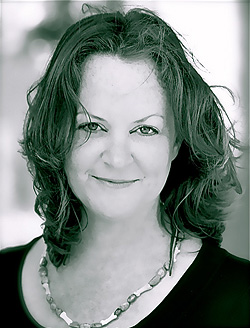
Elizabeth is currently an agent with Kimberley Cameron and Associates, works with She Writes Press, and works with private editing clients.
Elizabeth's career in publishing took root in Puerto Rico where she completed her BA in English and worked as a copyeditor for an English-language newspaper. When she returned to the mainland she found her "vein of gold" in book publishing. She thrives on working closely with authors to build their careers.
Elizabeth's eclectic life experience drives her interests. She appreciates writing that has depth, an introspective voice, and is thematically layered. Having lived in cities such as New York, San Francisco and San Juan, Puerto Rico, she is compelled by multicultural themes and characters and is drawn toward strong settings.
She represents both literary and commercial fiction as well as nonfiction, and brings to the agency experience as a former acquisitions editor, freelance publicist and writer.
Most writers I know carry notebooks and take notes all the time. I buy books with heavy weight paper, preferably lined, and interesting covers that hold up to Flair pens and hard knocks, usually from riding in my purse. You might say I accessorize with notebooks, and notebooks are my method of marking time. For instance, it was two notebooks ago that I went to Stanford for a class on getting published, led by David Henry Sterry and partner Arielle Eckstut, and took my notes in a book titled Lecture Notes with old fashioned iron keys dangling on the front and this quote:
That's the way it is
with dreams. They scratch at
your door. You see them through
the peep hole. A stray dream looking
for a home. You think it might go away
if you ignore it. Wrong. It's still
there when you open the door,
smiling. Wagging its tail.
My unpublished novel is baying on the porch. I'm opening the door...and I intend to succeed.
If you don't know who Sperry and Eckstut are, you should. They wrote The Essential Guide to Getting your Book Published: How to Write It, Sell It, and Market It...Successfully! and their workshop at Stanford discussed and built upon the book.
Here's a little foundation:
There are three ways to publish—traditionally, independently (through small presses) , and self-publishing ebooks and POD (print on demand) .
Today publishers aren't going to market or promote your book (unless you're already famous) so you need to be the "engine that drives the book."
Authors who are entrepreneurs succeed by following four principles.


Assignment: Start your query letter NOW! And let in that dream...
Now that The Hydra Effect book 1: Zihuatanejo is testing with "beta" readers, I'm thinking about what comes next. I'd love to find an agent and land a three-book deal sweetened with a fat advance, an editor, a publicist and a deep pocketed promotion budget. What writer wouldn't? But is it realistic to expect my first book to be noticed by the traditional publishing industry? Or is that the right publishing route for me?
There's a lot of talk about traditional publishing vs. self-publishing. Agent Nathan Bransford blogged last year, "These days it seems like traditional and self-publishing are increasingly pitted against each other on blogs and forums, as if one side or the other is the bastion of all that is good and pure in the world and the other side is the bastion of all that is horrible and evil." But it ain't so. There are pluses and minuses to both.
Self publishing is a viable option for may of us. In our favor, digitally published books are out-selling paper books. I haven't found a statistic that compares 2012 paper book sales to digital book sales but Amazon's 2012 digital book sales jumped 70% over the prior year and trends suggest Kindle and Kindle aps are expanding into international markets.
Amazon may not be your ideal solution, but their publishing subsidiary, Createspace, may offer you the opportunity to launch your book into the world as it has for Nathan Robert Winters, author of the soon to be released, Omaha Kid. His local Launch Party will be held on April 6 at the Rianda House in St. Helena. We asked him to tell us about his experience using the Createspace publishing tools and he gave us some pros and cons of using this service.
PRO
CON
He went on to inform us that when you begin the Createspace process, your manuscript must be ready, corrected, formatted and error free. Although it can be a bit of drudgery, if you do publish with errors in your book, you can take it down and re-upload a corrected version—another possible feature for the CON list. Your book will also need it's copyright and ISBN number, and a cover either predesigned, or you can use Createspace templates.
If you do choose to publish through Createspace, get a copy of Blake Webster and Steve Boga's book, How to Self-Publish Your Book The Createspace Way, A Step-by Step Guide to Writing, Printing and Selling Your Own Book Using Print On Demand. It's a nifty little book with plenty of screenshots that point out just what to do to upload your manuscript.
I haven't made up my mind how to approach my publishing dilemma, but learning about the many options is opening my eyes to what lies ahead. At least I've got two of my three jacket blurbs even if there isn't a jacket yet.